

Have you ever installed a new LED strip only to find that it flickers, appears unusually dim, or doesn’t light up at all? In many cases, the problem isn’t the LED strip—it’s an incompatible power supply.
Choosing the right power supply is one of the most important steps in any LED lighting project. A properly matched power supply ensures stable performance, improves energy efficiency, and helps maximize the lifespan of your lighting system.
In this guide, we’ll explain the differences between constant voltage (CV) and constant current (CC) power supplies, when each should be used, and why almost all modern LED strips operate with constant voltage power supplies.
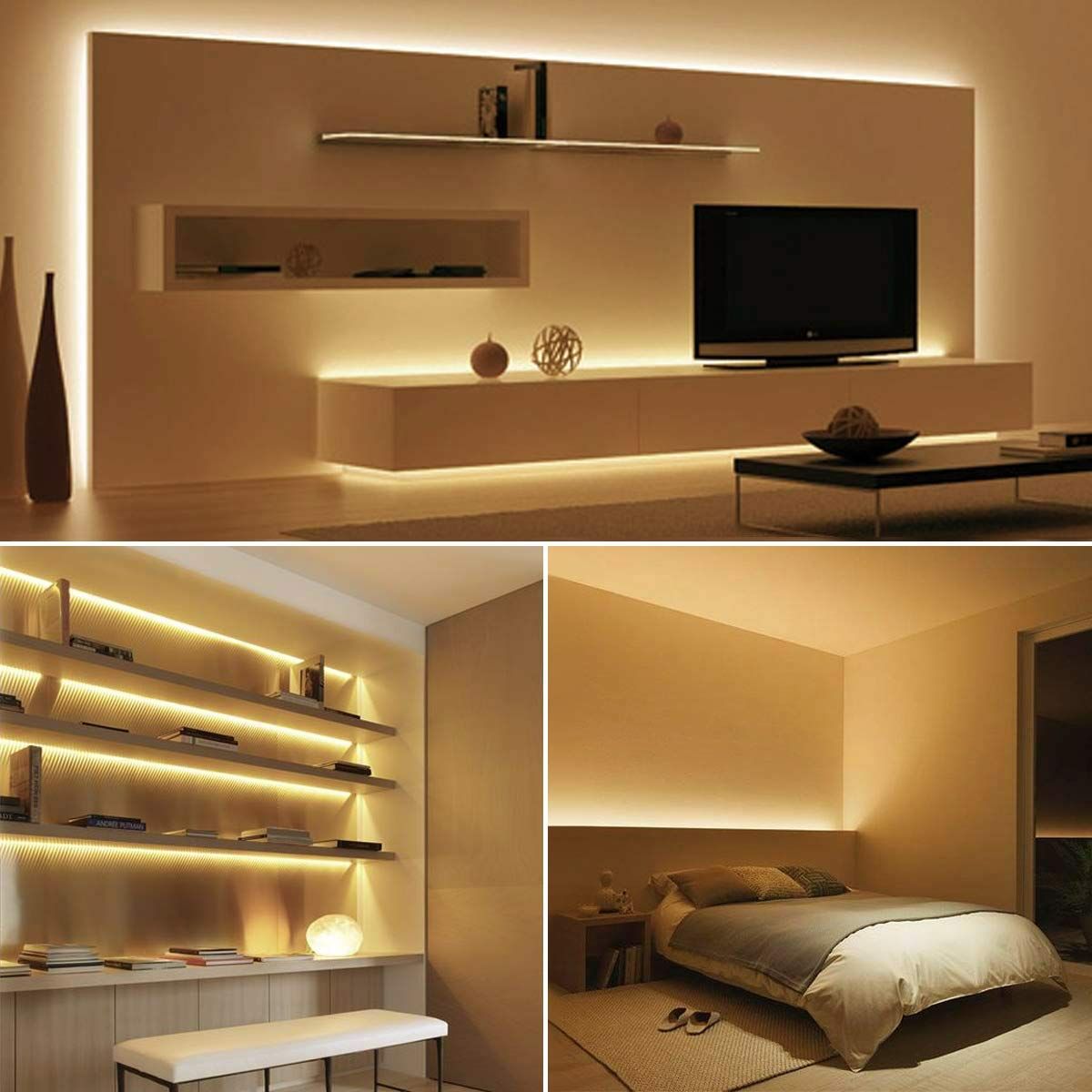
What Is the Difference Between Constant Voltage and Constant Current?
Both constant voltage and constant current power supplies convert AC mains electricity into low-voltage DC power suitable for LEDs. The difference lies in which electrical parameter remains constant during operation.
Constant Voltage (CV)
A constant voltage power supply delivers a fixed output voltage—typically 12V DC, 24V DC, or 48V DC. The connected LED load determines how much current it draws.
This is the standard power solution for flexible LED strips because the strip itself already includes current-limiting components, such as resistors or constant-current ICs, to regulate the LEDs safely.
Constant Current (CC)
A constant current power supply delivers a fixed output current, such as 350mA, 500mA, 700mA, or 1050mA. Instead of maintaining a fixed voltage, the driver automatically adjusts its output voltage to keep the current constant.
Constant current drivers are mainly used for high-power LEDs and professional lighting fixtures where accurate current control is essential for brightness, efficiency, and LED lifetime.
In simple terms:
- Constant Voltage = Fixed Voltage, Variable Current
- Constant Current = Fixed Current, Variable Voltage
Although both power supplies serve the same purpose, they are designed for different types of LED products and should not be used interchangeably.
Why Are Most LED Strips Constant Voltage?
If you’ve purchased an LED strip recently, you’ve probably noticed that it’s rated at 12V or 24V. This is because the vast majority of flexible LED strips on the market are designed as constant voltage products.
Unlike individual LED chips, which require precise current control, LED strips are engineered with current-limiting components already built into the PCB. This allows users to simply connect a compatible constant voltage power supply without worrying about current calculations.
Constant voltage systems have become the industry standard because they offer several advantages:
- Easier installation and wiring
- Simple cutting and extension at marked cut points
- Excellent compatibility with dimmers, controllers, motion sensors, and smart lighting systems
- Convenient maintenance and future expansion
For these reasons, almost all white LED strips, COB LED strips, RGB strips, RGBW strips, and LED neon flex products use constant voltage power supplies.
At SEMI LIGHT, nearly all of our flexible LED strips are designed for 12V or 24V constant voltage systems, making installation straightforward for both professionals and DIY users.
When Should You Use a Constant Voltage Power Supply?
A constant voltage power supply is the correct choice whenever the product specification states DC12V, DC24V, or DC48V.
Typical applications include:
- White LED strips
- COB LED strips
- RGB and RGBW LED strips
- LED neon flex
- LED modules
- Cabinet lighting
- Retail displays
- Architectural and decorative lighting
If the product label specifies a fixed operating voltage, always choose a matching constant voltage power supply.
When Should You Use a Constant Current Power Supply?
Constant current power supplies are commonly used in applications where LEDs do not include built-in current regulation.
Typical examples include:
- High-power LED modules
- Commercial luminaires
- Industrial lighting
- Linear LED light engines
- Professional architectural fixtures
These products are designed around a specific operating current rather than a fixed voltage, so using the correct constant current driver is essential.
It’s worth noting that some premium LED strips are marketed as constant current LED strips. In most cases, these products still require a 24V constant voltage power supply. The term “constant current” refers to integrated ICs on the strip that help maintain more consistent brightness over long cable runs—it does not mean the strip should be connected directly to a constant current driver.
What Happens If You Choose the Wrong Power Supply?
Using an incompatible power supply can cause several problems, including:
- The LEDs fail to turn on
- Flickering or unstable brightness
- Reduced light output
- Excessive heat
- Shortened LED lifespan
- Permanent damage to the LEDs
For example:
- A 24V LED strip connected to a 12V power supply may appear very dim or fail to light.
- A 12V LED strip connected to a 24V power supply can overheat and suffer permanent damage.
- Connecting a standard constant voltage LED strip directly to a constant current driver may also cause malfunction.
Even if the LEDs seem to work initially, operating outside the recommended electrical conditions can significantly reduce long-term reliability.
How to Size Your LED Power Supply
After selecting the correct power supply type, you’ll also need the appropriate wattage.
A simple rule is:
Power Supply Wattage ≥ Total LED Load × 1.2
For example:
- LED strip power: 10W/m
- Strip length: 5m
- Total load: 50W
A 60W to 75W power supply would be recommended.
Leaving 20–30% spare capacity allows the power supply to run cooler, improves efficiency, and extends its service life.
Frequently Asked Questions
Can I use a constant current driver for a standard LED strip?
No. Unless the manufacturer specifically states otherwise, standard LED strips should always be paired with a constant voltage power supply.
How do I know whether my LED strip is constant voltage?
Check the product specification. If it is labeled DC12V, DC24V, or DC48V, it is almost certainly designed for a constant voltage power supply.
Do COB LED strips use constant voltage?
Yes. Like conventional flexible LED strips, almost all COB LED strips on the market operate with 12V or 24V constant voltage power supplies.
Conclusion
Although constant voltage and constant current power supplies both power LED lighting, they are designed for different applications.
For the vast majority of LED strip lighting—including white, COB, RGB, RGBW, and LED neon flex—a 12V or 24V constant voltage power supply is the correct and safest choice. Constant current drivers are primarily intended for high-power LED modules and professional lighting fixtures where precise current regulation is required.
Choosing the right power supply not only protects your LEDs but also improves system efficiency, reliability, and long-term performance.
At SEMI LIGHT, we specialize in high-quality 12V and 24V LED strip solutions for residential, commercial, and architectural lighting applications. If you’re unsure which power supply is best for your project, our team is always happy to help you find a safe and reliable solution.




Leave A Comment